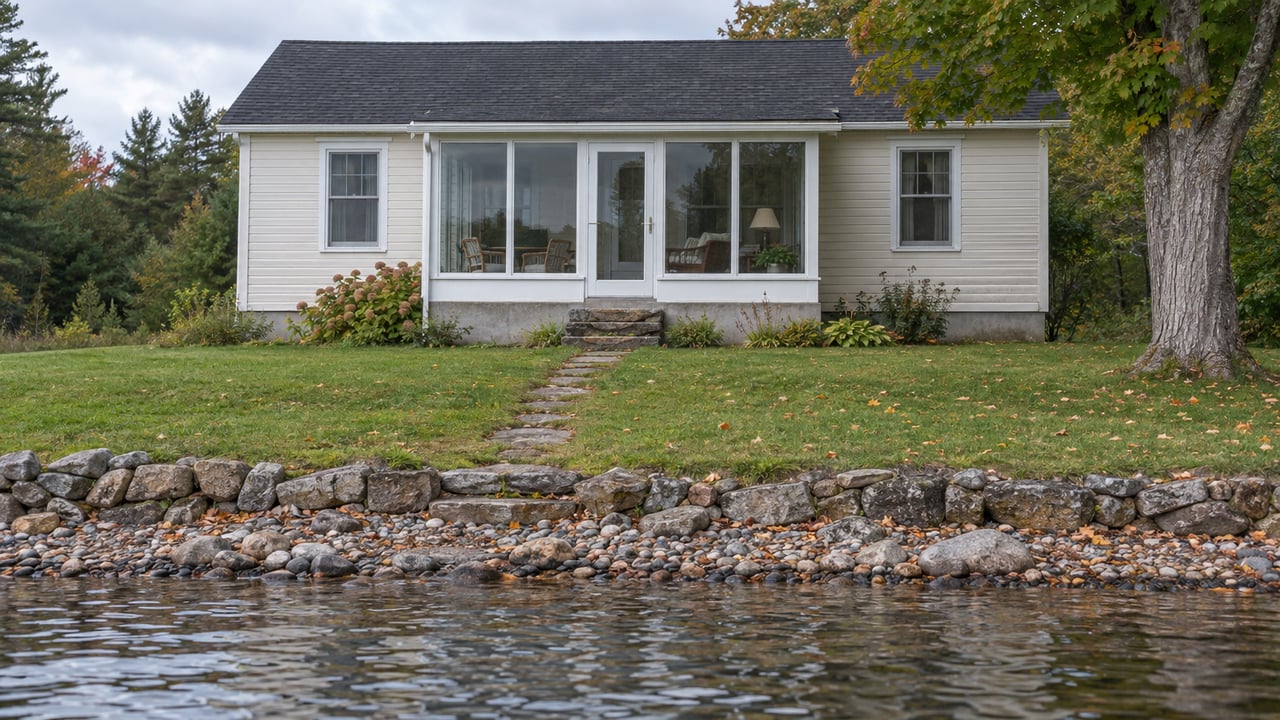
A buyer who closes on a Skaneateles Lake shorefront property this fall will spend the first year of ownership discovering that the Town building department is not the only office with a say in what happens on their new lot. Add a dock, replace a septic system, regrade a patch of shoreline for a patio, and the paperwork trail leads to a water department roughly 20 miles away, in a city whose limits do not touch the lake at all. That office is the City of Syracuse Water Department, and, according to Skanlakeinfo.org, it reviews site plans, erosion control measures, and septic work anywhere in the Skaneateles Lake watershed because the lake is the drinking water source for more than 165,000 people in Syracuse, Skaneateles, Jordan, Elbridge, and DeWitt.
This is the part of owning lakefront property here that rarely comes up during a showing. The Town and Village set the zoning, the setbacks, and the special-permit process. But the water underneath your dock belongs to a public water supply system, and that changes who signs off on the work.
The Watershed Is Bigger Than the Lakefront
The Skaneateles Lake watershed is defined as all land that drains toward the lake, which means the regulatory reach extends well past the visible shoreline into farmland, tributaries, and hillsides miles from the water. In July 2026, the Finger Lakes Land Trust closed a conservation easement on 90 acres at Eastmere Farms, a property along East Lake Road and Pork Street with more than 4,700 feet of frontage on Shotwell Brook, a tributary that feeds the lake. The easement does not sit on the water, but it exists because of the water: protecting the brook protects what eventually reaches the intake lines.
That's the scale a buyer is stepping into. Skaneateles Lake is one of the few large-system surface water supplies in the country approved to serve drinking water without a filtration plant, a status the City has held onto for decades by keeping tight control over what happens across the watershed rather than just at the shore. The practical result for a homeowner is that construction review does not stop at the property line the way it might on a lake that isn't a public water source.
What Actually Triggers a City Review
Not every project draws a call from Syracuse. According to Skanlakeinfo.org, the threshold that matters most is land disturbance: if a project disturbs 5,000 square feet or more, which covers most meaningful construction, an Erosion and Stormwater Control Plan has to be submitted to the City of Syracuse Water Department at least ten business days before any digging starts. That plan has to reach the City's office regardless of whether the local building permit comes from the Town or the Village.
Layered on top of that is the Town of Skaneateles's own lakeshore code, which requires site plan approval or a special permit for a specific list of structures: seawalls and retaining walls (unless they sit ten feet or more from the lake line), marine railways, permanent docks larger than 200 square feet, decks or patios larger than 400 square feet, stairways higher than 25 feet, and boathouses. A building permit is required for every permanent dock regardless of size.
Here's a quick reference for what typically triggers which review:
| Project | Who Reviews It | What Triggers It |
|---|---|---|
| Land disturbance (grading, large construction) | City of Syracuse Water Department | 5,000+ sq ft disturbed |
| Permanent dock | Town building department | Any size (building permit); over 200 sq ft needs special permit |
| Boathouse, seawall, retaining wall | Town Planning Board | Special permit required in nearly all cases |
| Septic install or repair | City of Syracuse Watershed Inspectors | Any new system or failure investigation |
| Construction inside the setback zone | Town or Village, depending on location | Village setback proposal would increase the zone from 50 to 100 feet |
Three full-time City of Syracuse staff, two Watershed Inspectors and a Watershed Quality Coordinator, patrol the lake and surrounding land on a rotating seasonal schedule. Lakefront seasonal cottages get walked in summer. Remote parcels off seasonal roads get checked in spring and fall. Inspectors are looking for septic failures and unpermitted construction, which means a renovation started without the paperwork in place is not a quiet risk. Someone is scheduled to notice.
The Dock Permit That Doesn't Always Come With the House
Buyers tend to assume a dock is a dock: it's there, it's been there for years, and whatever paperwork exists transfers with the deed. According to FingerLakes1.com, older dock permits don't always work that way.
Moorings sit in their own category entirely. Under the Village's proposed shoreline code, no Village permit is required for a mooring at all. Moorings answer instead to the New York State Office of Parks and Recreation, the state DEC, and the Onondaga County Sheriff's Department. A buyer who assumes their mooring and their dock are governed by the same office is working from the wrong assumption on at least one of them.
Before writing an offer on shorefront property, it's worth asking the seller directly whether the dock permit is current and whether it's ever been re-issued. That's a five-minute question during due diligence. Discovering the answer after closing, when a storm damages the dock and the rebuild needs a permit that doesn't exist, is a much longer problem.
Septic Sits at the Center of Every Inspection
Septic work in the watershed gets the closest attention of any category, and the record shows why. The watershed's septic violation map tracks issues going back to 1994, and it separates them by distance from the lake: 135 waterfront violations, 68 between 200 and 500 feet from the shore, and 203 beyond 500 feet. Watershed Inspectors specifically walk lakefront properties looking for signs of system failure as part of their seasonal rounds, and any new installation or repair goes through the City of Syracuse rather than a standard local permit process alone.
Grants and subsidies exist for homeowners upgrading to newer, more efficient systems through New York's Environmental Facilities Corporation septic replacement program. That's worth knowing before assuming a septic upgrade is purely an out-of-pocket cost, though the details of eligibility and amount are best confirmed directly with the state program rather than estimated in advance.
Why the Scrutiny Is Increasing Right Now
None of this is static. The lake recorded 145 confirmed harmful algal bloom events in 2024, up from 19 the year before. New York's DEC released a statewide five-year roadmap in March 2026 aimed at getting bloom activity under control across the state's water supplies.
At the same time, the City of Syracuse is in the middle of a $16 million project to extend one of the lake's two water intake lines to a greater depth, with permits for site preparation and equipment staging filed in August 2026. The current line sits only 20 feet below the surface, shallow enough that southerly wind events stir up sediment and force shutdowns an average of 11 times a year. The fix is a construction project on the lake itself, coordinated with the Village of Skaneateles, the Town of Skaneateles, and neighboring municipalities, and it's a visible reminder that the City treats this water supply as an active piece of infrastructure, not a scenic backdrop.
The Village, meanwhile, has floated doubling its lakeshore setback zone from 50 feet to 100 feet, an amendment that appeared in draft local laws in both 2024 and 2025. It hasn't been finalized as far as the record shows, but a property owner planning construction close to the water line should know the setback they're building against could be tighter than the one on record when they bought.
What This Means Before You Sign
A lakefront purchase or a lakefront renovation project moves faster when the paperwork question gets asked early rather than after an offer is accepted. Before signing anything, it's worth confirming three things directly: whether the dock or boathouse permit is current and transferable, when the septic system was last inspected and by whom, and whether any planned work crosses the 5,000-square-foot disturbance threshold that pulls the City of Syracuse into the review. None of these questions show up on a standard walkthrough.
FAQ
Does the Town of Skaneateles or the City of Syracuse issue the building permit for lakefront construction? The Town or Village issues the local building permit. The City of Syracuse Water Department separately reviews erosion control plans for larger projects and oversees septic work anywhere in the watershed, so a project can need sign-off from both offices before work starts.
Do all Skaneateles Lake shoreline projects need an erosion control plan? Only those that disturb 5,000 square feet of land or more, which covers most substantial construction but not smaller repairs or landscaping.
Will my dock permit transfer automatically when I buy a lakefront home? Not always. Older permits sometimes don't carry forward cleanly, and moorings are regulated separately from docks, by the state and county rather than the Village. Confirming permit status before closing avoids a surprise later.
Buying or selling on Skaneateles Lake comes with more moving pieces than the listing photos suggest, and getting the permit history right before an offer goes in saves time on the back end. Catherine Armijo has spent her career pairing hometown knowledge of this shoreline with the kind of financial and transaction discipline that catches these details early. Request a personalized consultation before your next lakefront move.
This article is general information, not legal, tax or financial advice. Consult a qualified professional about your situation.