For two decades, most New York sellers handled the state's Property Condition Disclosure Statement the easy way: they didn't. They gave the buyer a $500 credit at closing and moved on. That escape hatch is closed. Since the amended Property Condition Disclosure Statement went into effect on March 20, 2024, with new language on flooding and the removal of the $500 credit option, every seller of a one-to-four family home in the state now completes a full disclosure and attaches it to the contract.
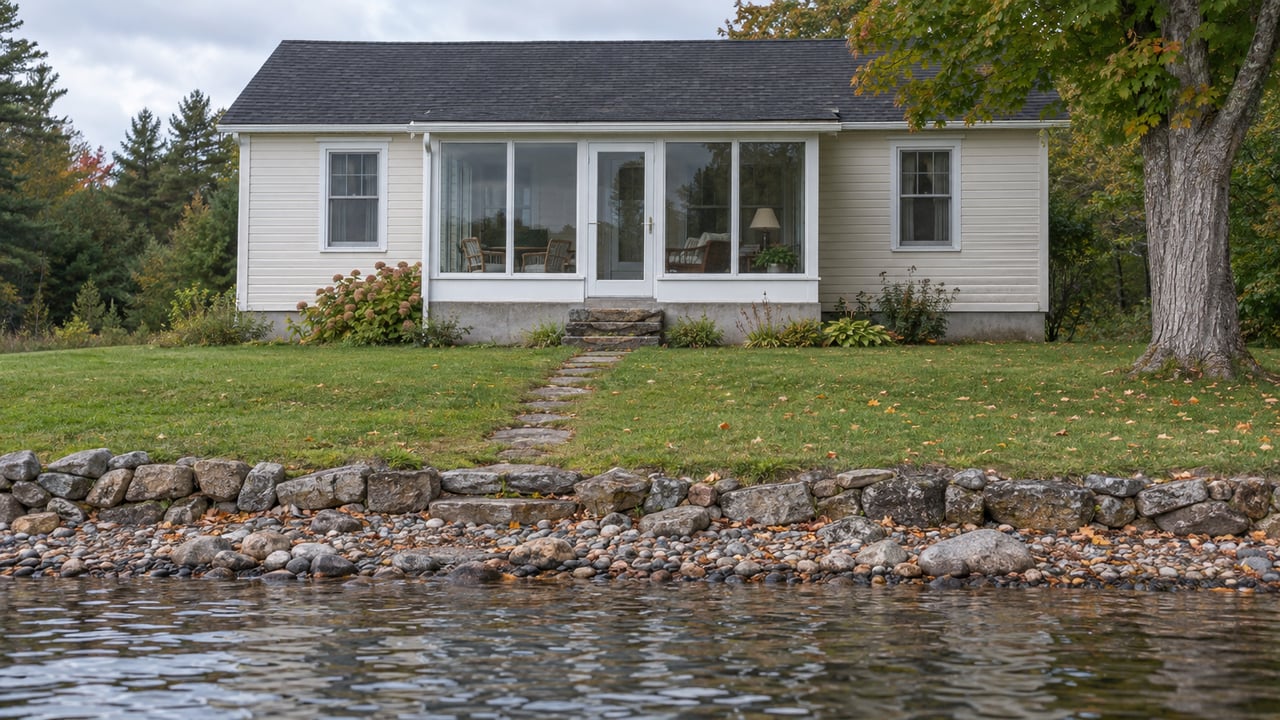
For sellers around Skaneateles Lake, that change matters more than it does almost anywhere else in New York. The questions the amended form asks about septic systems, wells, and flooding land squarely on the parts of a Skaneateles property that are already under the most regulatory attention in the state. The work of a sale used to happen after the inspection. Now much of it happens before you sign the listing agreement.
The friction moved forward in the transaction
Under the old rules, a seller who wasn't sure how to answer a disclosure question could take the credit and let the buyer's inspector surface the issue in negotiation. Sellers used the credit because the $500 credit became the default choice for most sellers because it limited their liability. Now the seller has to answer, in writing, to the best of actual knowledge, before a buyer signs a binding contract.
The New York State Bar Association's own review of the change noted the practical implication clearly: the amendment increases the number of PCDS questions to 56, with seven of the new items focused on flood exposure. For a lakefront or near-lake property, those are not throwaway questions.
What the amended form actually asks
The seven new flood-related items, as summarized by the New York State Bar Association, ask about:
- Whether the property sits in a FEMA 100-year or 500-year floodplain
- Any federal requirement to maintain flood insurance
- FEMA assistance previously received for flood damage
- Current flood insurance in force
- Any FEMA elevation certificate on file
- Whether a flood damage claim has been filed with an insurer
- The property's flood history known to the seller
The form still asks all of the old structural, mechanical, environmental, and occupancy questions on top of that. What it does not do is require the seller to go investigate. The property disclosure must be based on the seller's actual knowledge, without imposing an affirmative duty to investigate the property. "Unknown" remains an available answer. That sounds like a relief. In practice, a page full of "unknown" answers is its own signal to a buyer, and a lakefront buyer represented by a good agent will read it that way.
Why Skaneateles adds a second layer
Because Skaneateles Lake is the drinking water supply for the City of Syracuse, the watershed is monitored more actively than almost any comparable lake in New York. The Town of Skaneateles has partnered with Niles, Scott, Sempronius, Spafford, the Village, and the City of Syracuse to form the Skaneateles Lake Watershed Municipal Partners, a group that publishes rules, monitoring data, and inspection information at SkanLakeInfo.org.
That partnership isn't decorative. The City of Syracuse Watershed Protection Program runs an inspection program to detect violations of the Watershed Rules and Regulations, the NYSDOH and county sanitary codes, and the NYSDEC's Environmental Conservation Law, with full-time personnel patrolling the lake and watershed. Inspectors walk lakeshore properties, inspect for septic system failures, and investigate construction activities. The City's own annual report describes the program's dye testing of onsite wastewater treatment systems and a zone-based schedule, with lakefront seasonal cottage zones inspected during the summer months and remote areas off seasonal roads inspected in spring and fall.
Translated for a seller: if you own near the lake, there is a reasonable chance the City has already looked at your parcel, has notes on your septic, or will before the buyer's inspector arrives. Answers on your disclosure that don't match the City's records are the kind of thing that resurfaces late in a transaction.
The septic question, in particular
The single question that catches Skaneateles sellers off guard most often is age of the onsite wastewater treatment system. The Skaneateles Lake Watershed website spells out the standard the City is working from: a letter was mailed to residents with onsite wastewater treatment systems older than 30 years, and the EPA recommends property owners start planning to upgrade systems that are 25 to 30 years old, since they are likely approaching their useful lifespan.
Many Skaneateles homes, especially the older cottages along the east and west shore roads, are running on systems well past that window. A seller who discloses "unknown" on age and condition invites the buyer's inspector to fill in the blanks, and the answer is rarely favorable.
There is a partial financial cushion. The state's Septic System Replacement Fund, funded through the Environmental Facilities Corporation, provides grants that can reimburse property owners for up to 50% of eligible septic system project costs, up to a maximum of $10,000. That program is worth knowing about before a listing, not after a buyer asks for a credit. A seller who has already applied, or who has documentation of a recent replacement, walks into inspection negotiation with the story already written.
The Skaneateles Lake Association's basic maintenance guidance is also the standard a lakefront buyer's inspector will use as a baseline. Have your system inspected and pumped by a licensed professional every two to five years. If you cannot produce a pump receipt, you are effectively conceding the point.
A pre-listing document file that changes the negotiation
Assemble the file before the listing conversation. What follows is what a well-prepared Skaneateles seller brings to the table:
| Document | Where it lives | Why the buyer will ask |
|---|---|---|
| Septic pump and inspection records (last 5 years) | Your service provider or hauler | Age and condition question on the PCDS |
| Well water test results | Your testing lab or county health department | Potability question on the PCDS |
| Flood insurance policy or NFIP history | Your insurance carrier | Six of the seven new flood questions |
| FEMA elevation certificate, if one exists | Prior owner's closing file or a licensed surveyor | New flood question on the PCDS |
| Building permits for additions, docks, boathouses | Town of Skaneateles Codes Office | Watershed rules compliance |
| Electrical inspection certificates | One of the seven third-party electrical inspection agencies approved in the Town of Skaneateles, including Commonwealth Electrical Inspection Service, CNY Electrical Inspection Services, and Middle Department Inspection Agency | Older wiring in village and lakeshore homes |
| Any City of Syracuse Watershed correspondence | Your own files, or request from the City | Reconciling your disclosure with the City's records |
None of this is unusual for a well-run transaction. What is unusual is doing it before you sign the listing agreement rather than after the inspection report lands.
What this looks like in the current market
The urgency has changed because the market has. The median sale price of a home in Skaneateles was $949,000 over the three months ending May 2026, up 10.7% from the same period the prior year, with median price per square foot at $367. Prices are still climbing. What has shifted is time on market. Homes in Skaneateles sold after a median of 77 days on the market, compared to 48 days a year earlier.
Read those two numbers together. Buyers are still paying strong prices, but they are taking longer, asking more questions, and giving inspection findings more weight in the negotiation. A seller who hands a buyer a fully completed disclosure, a septic pump receipt, a well test, and a permit file compresses the buyer's due diligence window. A seller who does not, extends it, and every extra week is another chance for the deal to change shape.
The old $500 credit didn't just save paperwork. It papered over the moment when the buyer's inspector, appraiser, and attorney would each turn up something the seller hadn't thought to mention. That paperwork is gone. The moment isn't.
FAQ
Can a seller still refuse to fill out the PCDS? The credit option is gone, but the amended statute is not fully settled on what happens if a seller simply doesn't deliver a completed form. The New York State Bar Association observed that with the $500 seller credit deleted, it is difficult to foresee what liability the seller would have if a fully completed PCDS is not delivered prior to signing a contract. That is a question for the seller's attorney, not a strategy to plan around.
Does the PCDS requirement apply to every Skaneateles sale? No. The law applies to sales of one-to-four family residential real estate, and does not cover unimproved land, condos, coops, or HOA sales. Estate sales by the executor of a deceased owner are also exempt. Most Skaneateles village and lake home sales are covered.
What if a seller is honestly unsure about a septic or flood answer? "Unknown" is a legal answer. It is also a signal. A seller who plans to answer "unknown" on the systems most likely to affect price should consider a pre-listing inspection so the answer becomes specific before the buyer's inspector makes it specific for them.
Is the City of Syracuse Watershed Protection Program actually inspecting private homes at sale? The City's activity is continuous, not triggered by a sale. There is an increase in regulated activity within the watershed during the summer months from May through September, driven by seasonal residents and non-resident recreational users. A summer listing in a lakefront zone is more likely to overlap with an inspector's visit than a winter one.
Working with someone who knows the file
The amended disclosure form is a statewide change. The way it plays out around Skaneateles Lake is local, and it rewards preparation. If you are thinking about listing in the next six to twelve months, the useful work starts now: pull the septic records, order the well test, check your permit file, and reconcile any watershed correspondence with what you plan to write on the form.
If you would like a walk-through of what your file looks like before you commit to a timeline, Catherine Armijo is available for a personalized consultation.